
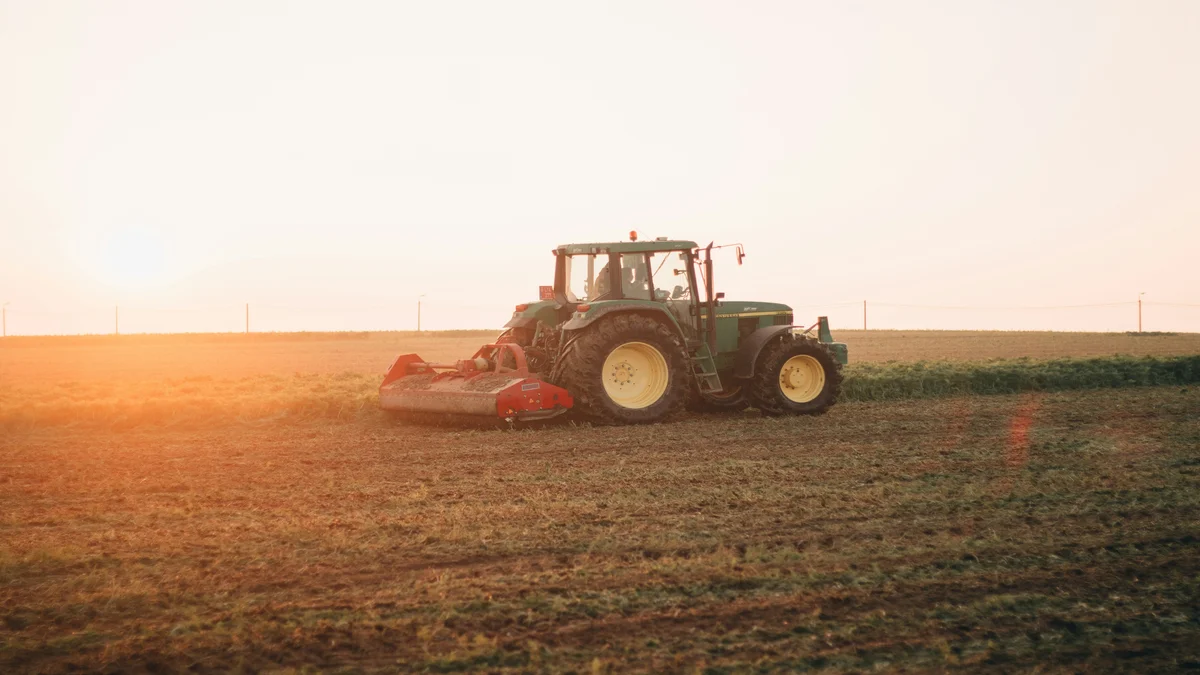
A major initiative underway in the Cambridgeshire Fens is examining how the United Kingdom can achieve its climate objectives while safeguarding one of the nation's most productive agricultural regions.
The endeavor represents a critical test of whether farming on some of Britain's most carbon-intensive soils can be transformed to meet net zero targets without sacrificing the food security that the region provides.
The Fens occupy a paradoxical position in the UK's environmental and agricultural landscape. This low-lying region supplies approximately one-third of the country's vegetables and one-fifth of all crops, supporting 80,000 people employed in the farm-to-fork supply chain and generating over £3 billion in economic value. Yet the intensive agriculture that has made the Fens so productive sits atop an environmental liability.
Drained peat soils, which comprise nearly a quarter of all lowland peat in England and Wales, emit greenhouse gases at rates up to 30 times higher than conventional agricultural soils. A hectare of cropland on deep peat can emit as much as 37 tonnes of carbon dioxide equivalent annually, compared to just one or two tonnes from typical arable farming.
The scale of this challenge became quantifiable only in recent years. Defra's peatlands policy specialists have identified that where crops are grown on drained peatland, the annual emissions from peat oxidation and mineralization create an emission factor that dwarfs those from other land uses.
Across England, the 250,000 hectares of cropland and intensive grassland on peat accounts for 88 percent of all peat-related greenhouse gas emissions, totaling just under eight million tonnes annually—roughly two percent of the UK's total emissions. More than half of the land use emission reductions required by 2040 must come from peatlands, according to the Climate Change Committee, yet lowland peat restoration currently stands at only nine percent of the resource base, far below the 31 percent target needed by 2040.
The Great Fen Approach
At the heart of the response stands the Great Fen project, a long-term restoration initiative centered near Ramsey in Cambridgeshire. In 2021, the project received £8 million in funding from the National Lottery Heritage Fund to establish the UK's first significant trial of "wet farming"—a technique known as paludiculture, in which crops are cultivated on rewetted peatland with water tables maintained at carefully managed levels.
The Great Fen aims to sequester more than 4,000 tonnes of carbon by growing crops without disturbing the underlying peat soils, while simultaneously enhancing biodiversity and improving water quality.
The scientific basis for this approach rests on a straightforward relationship between water table depth and carbon emissions. Research using flux towers—instruments placed in fields to measure soil carbon dioxide emissions directly—has revealed that raising the water table can significantly reduce peat oxidation. For every ten centimeters of rise in the effective water table, emissions decrease by approximately five tonnes of carbon dioxide equivalent per hectare annually.
However, the optimization is not straightforward. Fully saturated conditions generate methane through methanogenic bacterial processes, creating a different but equally potent greenhouse gas problem. Recent research suggests an optimal "sweet spot" exists at approximately ten centimeters below the water table surface, where net emissions from both carbon dioxide and methane are minimized.
The practical implications are substantial. Measurements from specific Fen sites illustrate the range of outcomes possible. Sedge Fen, managed as a semi-natural wetland, functions as a net carbon sink, sequestering approximately 300 grams of carbon per square meter annually.
Baker's Fen, taken out of agricultural production and now used as grassland grazed by ponies, emits roughly 314 grams per square meter. Rosedene, farmed conventionally, emits 760 grams per square meter—though this varies significantly depending on the crop grown and weather conditions. These measurements demonstrate that land management decisions directly translate into atmospheric emissions.
Paludiculture and Novel Crops
Paludiculture itself is not entirely novel; wetland farming has been practiced in various forms across Europe and beyond. What distinguishes current trials in the Fens is their integration with commercial agriculture and their potential to provide sustainable livelihoods for farmers.
The CANAPE project (Creating a New Approach to Peatland Ecosystems), funded through the European Union's Interreg North Sea Region Programme, has established demonstration sites including one at Horsey in the Norfolk Broads, where a 1.3-hectare field is testing wet farming at commercial scale.
The crops being trialled span both traditional and innovative wetland products. Reed cultivation has the longest commercial history, with established markets for thatching that currently relies on imports for 95 percent of the UK's supply—accompanied by significant transport-related carbon emissions. Typha, commonly known as reed mace, is being developed for textile production, potentially offering an environmentally friendly alternative to synthetic fiber insulation materials.
Novel crops including hemp agrimony, meadowsweet, watercress, and cuckoo flower are being evaluated for medicinal and culinary applications. Beyond direct crop production, waste reed from wetland management is being processed into biochar and compost, transforming what was previously burned or left to decay into products that can improve soil quality on neighboring farmland.
Research teams are also exploring digital solutions. The UK Research and Innovation AI for Net Zero programme is funding work on "digital twins"—computational models that integrate satellite imagery, flux tower data, scientific models, and artificial intelligence to simulate management outcomes.
These tools could enable farmers to identify which land management options would most effectively reduce emissions while maintaining productive output.
Climate Pressures and Urgency
The impetus for transformation has intensified with recent climate impacts. The summer of 2025 brought extreme heat and drought to the Fens, resulting in substantial crop failures that underscored the fragility of the region's current agricultural model.
The Tyndall Centre for Climate Change Research's December 2024 assessment of climate change impacts on the Fens found that rising temperatures will bring intensified flooding, severe droughts, biodiversity loss, and drastic disruptions to agriculture if adaptation does not occur. The region faces a potential increase in the frequency and severity of both waterlogging and drought—conditions that strain the complex drainage and irrigation infrastructure upon which Fen agriculture depends.
Precipitation patterns are shifting unpredictably. The winter of 2023-24 was the wettest on record, while the spring and summer of 2025 constituted the driest period in a century.
These extremes reduce combinable crop yields by 20 to 33 percent compared to historical averages, with field vegetable losses and forage crop reductions as high as 60 percent. Water scarcity is projected to become critical within five to ten years, while rising sea levels pose an accelerating threat to the region's extensive flood defense infrastructure.
The Research Partnership and Stakeholder Engagement
The Cambridge Centre for Landscape Regeneration, working under the leadership of chief scientific advisor Emily Shuckburgh, has adopted a collaborative approach that engages farmers, conservationists, and policymakers.
Shuckburgh has emphasized that while researchers understand the challenge of balancing carbon reduction with methane emissions, the transition depends on farmer participation and innovation. "We are investigating how to tackle these dual challenges, but we are doing so in partnership with the farming community, conservationists, and all other stakeholders connected to the landscape," she noted.
Megan Hudson, head of research at Oxwillow, is leading paludiculture trials that examine crop viability on significantly wetter soils.
The research team is gaining better understanding of water table management feasibility on these sites, creating what Hudson described as "some optimism that a solution may exist for transforming our agricultural systems moving forward." This farmer-centered approach is critical; agricultural experts recognize that technical solutions, however promising, require adoption by individuals whose livelihoods depend on the land.
Food Security and Economic Viability
The central tension in the Fens transformation lies in reconciling climate objectives with food security. The UK's dependence on Fen production means that converting large portions of productive land to wetland restoration cannot proceed at the expense of national food supply. The region currently holds half of England's Grade 1 farmland—the highest classification—and contributes to meeting domestic demand for fresh vegetables that might otherwise be imported.
Climate change, however, is making current crop production more difficult, not just because of extreme weather events, but because fundamental agro-climatic conditions are shifting. At 2 degrees Celsius of warming, which could occur between the 2030s and 2050s, many current major Fen crops may show plateaus or declines in yield, while water availability becomes increasingly constraining.
New crop varieties and species may emerge as viable alternatives. Some opportunities exist for crops better suited to warming conditions, though these remain contingent on adequate water availability and appropriate infrastructure. Paludiculture itself offers a pathway toward economic viability on rewetted land; reed, typha, and medicinal herbs can generate revenue while maintaining lower emissions than conventional crops.
However, farmers require market certainty and infrastructure investment before transitioning from established production systems. The challenge is simultaneously urgent and long-term: decisions made now about land use and investment will determine whether the Fens can contribute to both UK net zero targets and future food security.
Broader Infrastructure and Policy Context
The Great Fen project exists within a constellation of related initiatives. The Fens 2100+ programme, in partnership with flood risk management authorities and agricultural communities, is developing a landscape-wide flood resilience investment strategy that acknowledges climate change adaptation as central to the region's future.
Water Resources East, a strategic initiative addressing regional water security, coordinates with both flood management and agricultural water availability concerns.
The policy environment has shifted substantially. The UK's legally binding net zero commitment by 2050, enshrined in law and echoed in recommendations from independent advisory bodies, places peatland management at the center of terrestrial emissions reduction strategy.
The Climate Change Committee's latest carbon budget advice assumes that by 2050, nearly 60 percent of lowland peat will be restored with water tables at or near the land surface, with particular emphasis on cropland due to its higher annual emissions. Simultaneously, the government is exploring how private investment and natural capital markets can support peatland restoration and paludiculture, recognizing that public funding alone is insufficient for the scale of transformation required.
Looking Forward
The Fens wetland farming project represents neither a complete transition away from agriculture nor a return to pre-drainage conditions. Rather, it constitutes a deliberate experiment in what agricultural systems might look like when carbon emissions, water security, biodiversity, and food production are integrated rather than treated as competing objectives.
Success will depend on maintaining farmer engagement, securing sustained funding, developing viable commercial pathways for wetland crops, and continuing to refine the understanding of which specific practices, on which soils, with which crops, can achieve the optimal balance between emissions reduction and productive output.
The stakes are substantial. The Fens produce food that feeds millions of people. The peat soils that make this production possible are simultaneously the source of millions of tonnes of atmospheric carbon annually. The region faces climate changes that will make conventional agriculture more difficult, while possessing the capital, technical expertise, and research infrastructure necessary to pioneer alternatives.
Whether the Great Fen and related projects can demonstrate that net zero agriculture is compatible with food security will have implications far beyond the flat horizons of East Anglia, influencing how other agricultural regions confront similar challenges in the coming decades.
